

There is no shortage of psychedelic training programs right now. Everybody wants in.
Most of them are general. Most of them are long. Most of them are expensive. Many are built for a room full of mixed professionals curious psychedelics — because that’s who’s actually filling the seats.
That means most of what gets taught is basic counseling skills. How to sit with someone. How to hold space. How to be a therapist.
We already know how to do that and don’t need more training with non-therapists to curate those skills.
This training is just for licensed clinicians eligible to bring ketamine directly into an outpatient practice. And it isn’t teaching you how to do therapy since we all have different approaches to our work. It’s teaching you how to bring one specific medicine into the therapy you already do.
What Makes This Different
No general psychedelic theory. No basic counseling skills review. No time spent on medicines you’re not yet legally able to use in your practice.
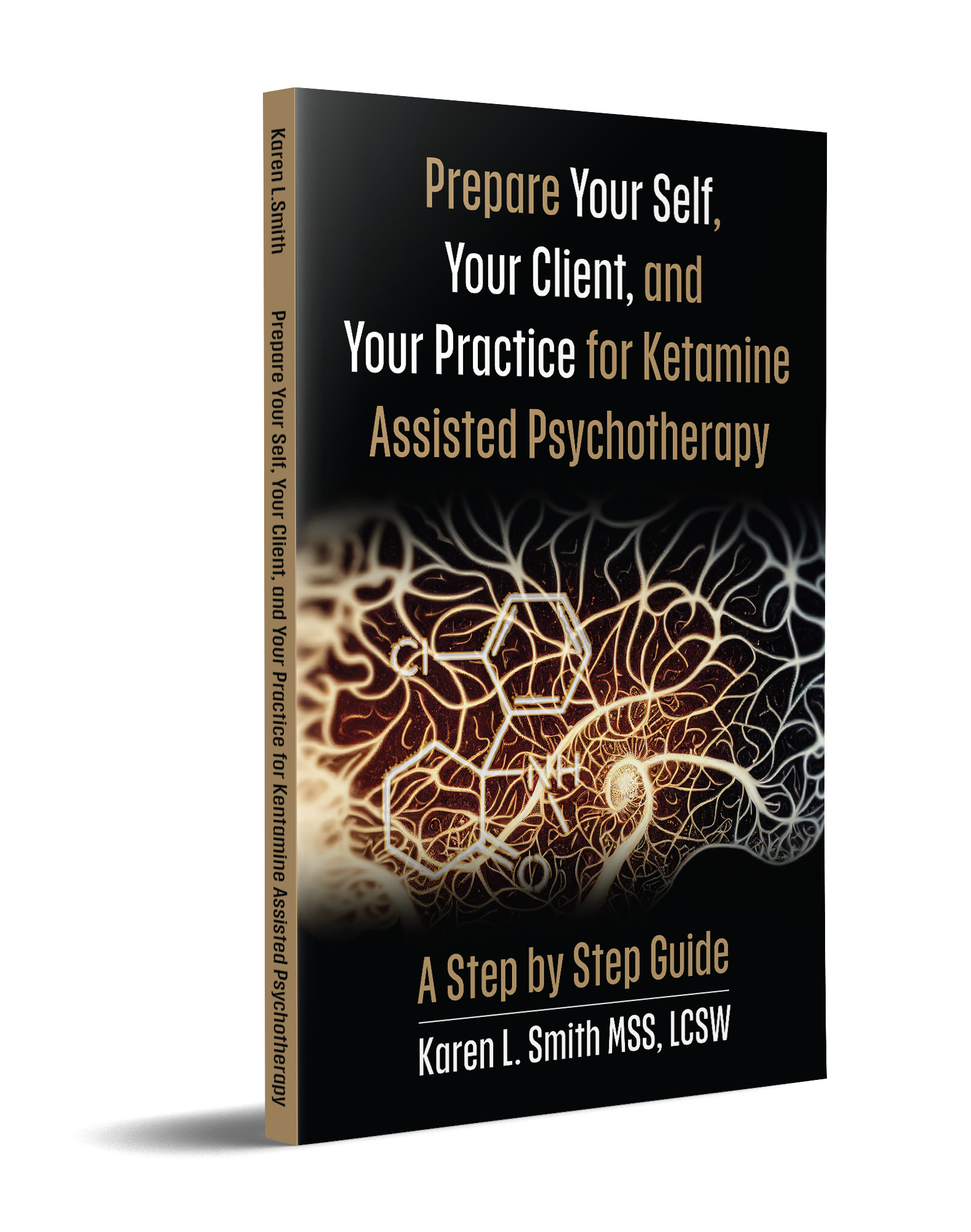
Just the concrete, nuts-and-bolts, operational information that actually gets a KAP practice up and running — the same information in Prepare Yourself, Your Clients and Your Practice: A Step-by-Step Guide to Ketamine-Assisted Psychotherapy, now walked through in full instructional video form.
Some of it is just about the level of detail we need to cover. Some of these topics get 3 minutes in programs. We will review them in detail
- Accessing a clint for clinical candidacy
- Working with high-risk clients in harm reduction model
- Setting up a relationship with a prescriber
- Malpractice insurance and billing
- Spacing sessions for psycholytic versus psychedelic dosing
- At-home versus in-office protocols
- Consent forms, touch refusal exercises, managing expectations
- Preparing for and managing difficult sessions
- Tracking integration/Managing the pacing of treatment
Learn On Your Own Schedule
7 hours of instructional video. Immediate download. Watch it in order or jump to what you need. Re-watch as many times as you want, for as long as you want.
No cohort. No live session times to clear your calendar around. No pace but yours.
What’s Covered
Introductory Clinical Overview of Ketamine-Assisted Psychotherapy Ketamine as the psychotherapy-friendly psychedelic. The three distinct vehicles for change. Clients and conditions well-suited to KAP. Medical and clinical contraindications. Therapists well-suited to this work. Whether you should try the medicine yourself.
Evaluating Clients for Candidacy Pre-consultation screening — medical and clinical. The brief initial consultation, with role-play demonstration. Managing expectations in that first conversation. Substance use, abuse, addiction, and sobriety considerations.
KAP Onboarding Consents Clinical informed consent, with role-play demonstration. Touch consents and touch refusal exercises, with role-play demonstration. At-home consents and protocols. Managing expectations of the treatment process. Treatment protocol design.
Preparation Sessions Mindset for psychedelics. Intention setting. Setting considerations.
Medicine Journey Sessions A consideration of music and psychotherapy. The medicine journey itself, with role-play of sessions — including difficult sessions.
Integration
Bonus: The Business of KAP
Plus accompanying Client Intake, Consent, and Support Documents, ready to use or adapt for your own practice.
Who This Is For
You’re already KAP trained, but you can’t get straight answers to the mundane, concrete questions that actually operationalize this work.
You’re just starting out, curious about bringing psychedelic-assisted psychotherapy into your work, and want a real step-by-step guide — from candidacy evaluation through integration.
You’re already doing this work and want a thorough review, at your own pace, without repeating a training you’ve already sat through once.

About Karen
Karen L. Smith, MSS, LCSW, is the clinical director of Full Living and the author of Prepare Yourself, Your Clients and Your Practice: A Step-by-Step Guide to Ketamine-Assisted Psychotherapy. She has been an analytically oriented psychotherapist for over 30 years, and became an absolute believer in ketamine-assisted psychotherapy the first time she trained in it.
This series is her attempt to give other licensed clinicians the thing she wishes she’d had: not another overview of psychedelics, but the specific, practical information it takes to actually do this work.
Not sure yet? There are several $1 videos on individual KAP topics — a low-stakes way to get a feel for learning with Karen before committing to the full series.